


Data conversion transforms scanned images into structured information that can be searched, organised, filtered and explored online.
For more than 20 years, Veridian has helped libraries, archives and cultural heritage organisations convert newspapers and other complex historical materials into standards-based outputs that support online access, interoperability and long-term collection growth.
Once data conversion is complete, Veridian Presentation Software can make the resulting collection searchable and accessible online.
What does data conversion produce?
High-resolution master images, typically uncompressed TIFF files from the scanning phase, are converted into structured, standards-based formats that prepare collections for online access and discovery.
Depending on the collection and project requirements, outputs can include searchable OCR text, metadata, METS/ALTO XML, PDFs and JPEG 2000 images.



Automated Page-Level METS/ALTO
This automated option produces page-level METS/ALTO and OCR, making content full-text searchable while retaining a page-based structure. It is the most cost-effective approach for large collections where article-level segmentation is not required.
Estimated cost: US$0.15 per page
Best suited for:
- Page-based, text-heavy materials
- Newspapers, magazines, journals, and reports
- Collections with good-quality scans or microfilm
- High-volume projects where article-level structure is not required
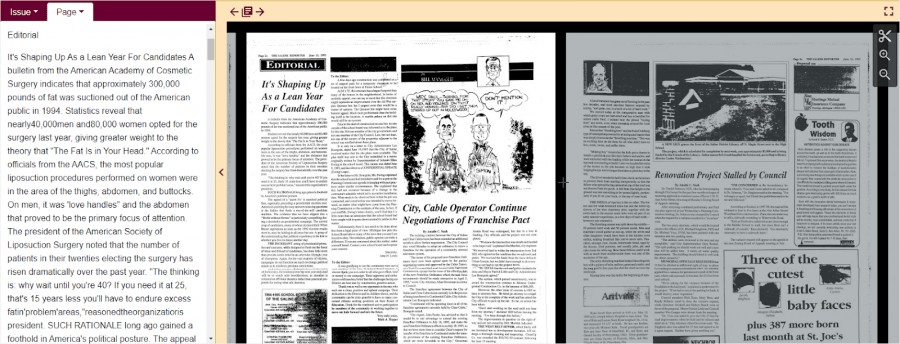
Page-Level METS/ALTO with Text Block Auditing
Text blocks are manually audited to identify issues such as incorrect reading order or inaccurately captured content. This improves OCR usability while retaining a page-based structure.
Estimated cost: US$0.28 per page
Best suited for:
- Page-based materials with more complex layouts
- Newspapers and magazines with multiple columns or dense content
- Books and journals where improved reading order is important
- Projects requiring greater OCR quality assurance
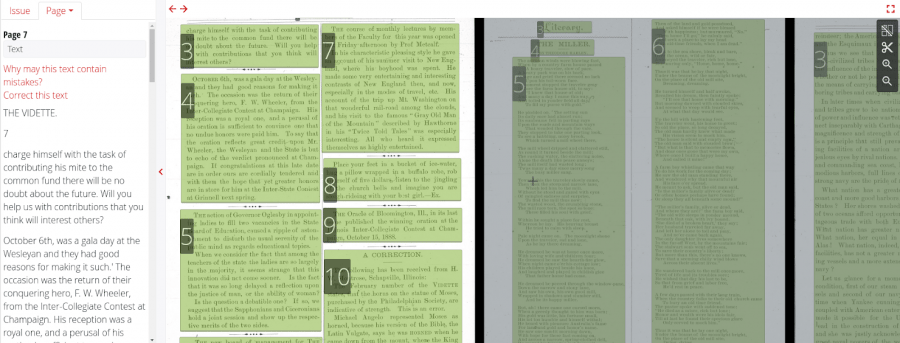
METS/ALTO with Article Segmentation & Headline Cleanup
This option uses human review to identify individual articles and improve headline data, preserving more of the publication’s logical structure. It provides a richer search and browsing experience but requires more detailed processing.
Estimated cost: US$0.71 per page
Best suited for:
- Newspapers and periodicals where content is organised into distinct articles
- Magazines and journals where section-level navigation is valuable
- Projects prioritising article-level search and browsing
- Collections where preserving publication structure is important
