Single Sign-On can simplify access to digital collections, support institutional authentication, manage user permissions and verify contributors. It can also help organisations connect their collections to established identity and access-management systems.
Single Sign-On (SSO) is an authentication method that allows someone to access a digital collection using credentials managed by an existing identity provider, such as their institution, Microsoft, Google or a government identity service. This reduces the need for separate collection accounts and passwords.
The benefits of SSO for digital collections
Select a benefit below to learn more:
Improved public access
Researchers, genealogists and other users may move between several collection platforms while exploring a subject. Requiring a separate account and password for every collection creates unnecessary friction and increases the number of credentials users must manage.
SSO can reduce this burden by allowing people to sign in using credentials they already use, such as an institutional, Microsoft or Google account.
This provides several benefits:
-
Reduces the number of accounts and passwords users must manage
-
Lowers barriers to signing in
-
Simplifies return visits
-
Aligns with best-practice accessibility principles
Users are already accustomed to seamless sign-in experiences through everyday apps and platforms. Increasingly, they expect digital collections to provide the same level of simplicity.
Trusted institutional authentication
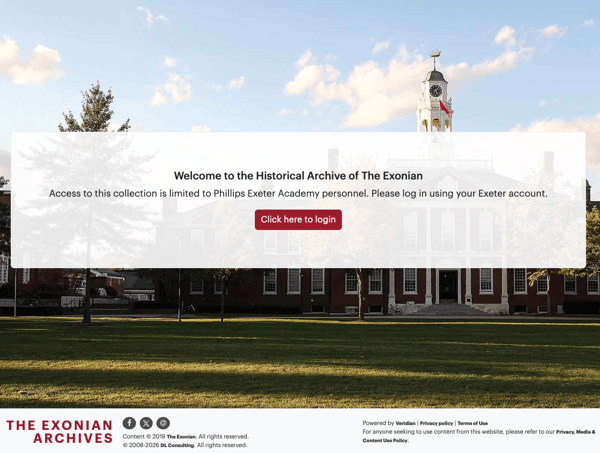
Many digital collections provide access through an affiliated school, university, library or other organisation. Institutional SSO allows the collection to recognise eligible users through the organisation’s existing identity provider, without requiring them to create and maintain another account. For example, Philips Exeter Academy uses Azure AD as its identity provider to manage access to The Exonian Archive.
This approach offers several benefits:
-
Removing the need for users to re-register on the collection platform
-
Reducing administrative overhead
-
Simplifying onboarding and offboarding
-
Replacing older IP-only or access-code systems
Related reading: Flexible Access Models to Help Bring More Collections Online
Role-based permission management
SSO can pass information about a user’s institutional role or group membership to a digital collection. The collection can then provide different access or functionality to authorised groups without recreating and maintaining those groups separately within the platform.
vInstitutional SSO enables organisations to manage roles and permissions within their own systems. For example, at Harker School, archive access can be differentiated between:
-
Staff
-
Current students
-
Alumni
-
Family members
Group membership is managed within the school’s identity system — where it already exists — instead of being recreated and maintained within the collection platform.
Verified user contributions
Libraries, archives, and cultural heritage organisations are often required to implement SSO because it supports verified participation — not just access to a collection.
This is particularly important where users can contribute to the collection, such as making OCR text corrections, adding tags, or contributing to metadata. In these contexts, SSO ensures contributors are authenticated through trusted identity providers.
This supports:
-
Accountability
-
Moderation
-
Higher-quality contributions
-
Reduced anonymous misuse
Compliance with national and government identity frameworks
In some environments, SSO is not just a usability enhancement — it is a regulatory or compliance requirement.
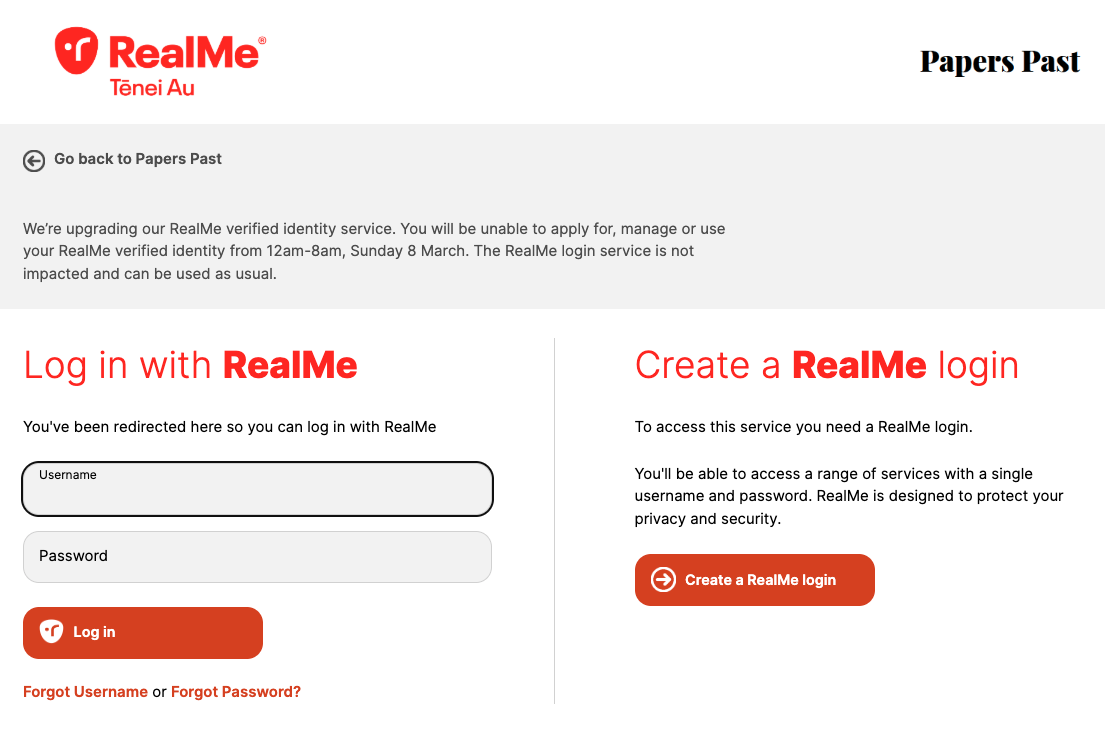
For example, the National Library of New Zealand uses RealMe, a government-backed identity verification service, for access to Papers Past.
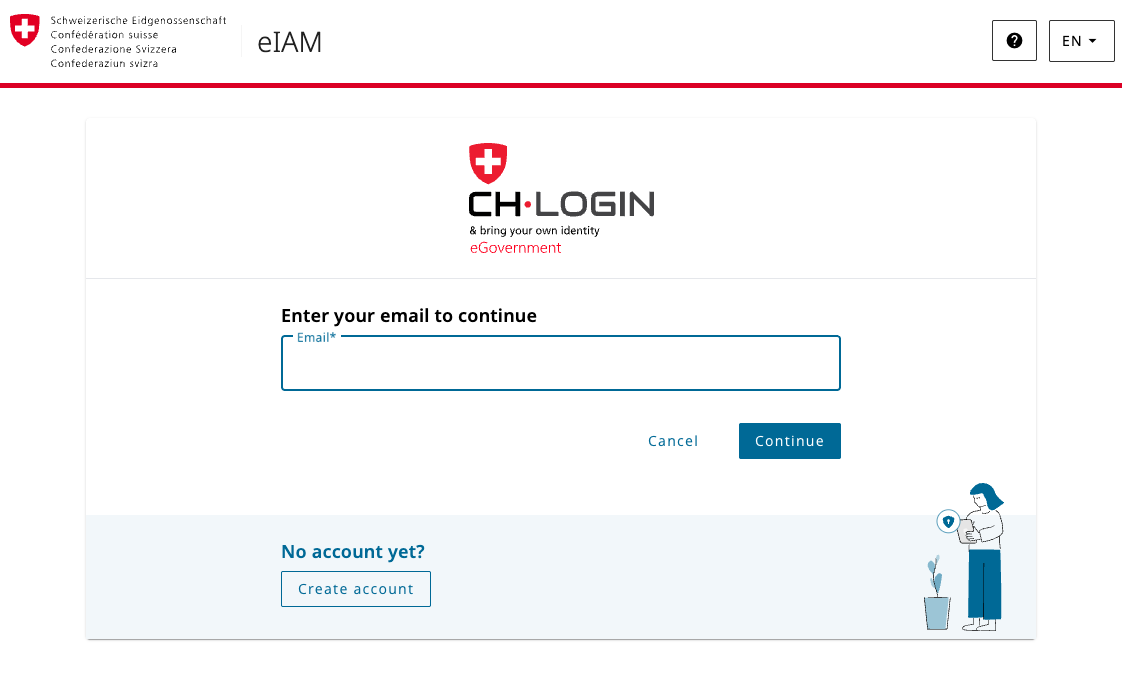
Similarly, the Swiss National Library collection of historical newspapers integrates with its federal authentication system eIAM.
In these contexts, SSO aligns digital collections with national identity and security frameworks, ensuring consistency, accountability, and regulatory compliance.
 |
 |
How could SSO enhance your collection?
Whether you are looking to simplify public access, modernise institutional authentication, or align with national identity standards, SSO can play a strategic role in how your collection operates and grows. If you would like to explore how SSO could be implemented within your Veridian deployment, get in touch with our team.