Explore how open, restricted, institutional, account-based, subscription and hybrid access models can help libraries and archives make more collection material available online.
Digital collections can use open, institutional, account-based, subscription, tiered or hybrid access models. The appropriate model depends on the material, intended audience, rights and licensing conditions, privacy considerations, cultural responsibilities and the organisation’s available resources.
Collections do not have to be entirely open or entirely restricted. Different access conditions can be applied to different materials, users and features within the same collection.
The central question is therefore not simply whether a collection should be open, but how access can be designed to make more material available responsibly, sustainably and in ways that reflect the communities connected to it.
What are the main access models for digital collections?
Libraries, archives and cultural heritage organisations use several access models, which can be applied individually or combined within the same collection.
Common models include:
- Open access: Collection material is publicly available any access restrictions
- Institutional access: Access is limited to users within specified organisations or IP address ranges
-
Account-based access: Users must register or sign in before accessing specified material
- Tiered access: Different materials or features are available to different user groups
-
Feature-level access: Collection content remains open, while advanced tools, downloads or datasets require authorisation
-
Paywall models: Users or institutions pay, usually via a subscription, to access some or all content.
-
Hybrid models: Two or more access models operate within the same collection
The key is flexibility — designing access around the nature of the material, the needs of users, and the responsibilities of the institution.
|
Access model |
Who can access it? |
Common application |
|
|
|
|
|
|
|
|
|
|
|
|
|
|
|
|
|
|
|
|
|
|
|
|
|
|
|
|
How can access models be applied in practice?
The scenarios below help demonstrate how access can be structured using these models across a range of collection environments.
-
Scenario 1: Intentional and accountable access for community-led archives
-
Scenario 2: Rights-managed and licensed content
-
Scenario 3: Extending access beyond physical reading rooms
-
Scenario 4: Supporting advanced research environments
Scenario 1: Intentional and accountable access for community-led archives
This approach is particularly relevant for vulnerable or under-represented communities, where collections may include:
-
Named individuals.
-
Records of activism or protest participation.
-
Photographs and personal narratives.
-
Culturally sensitive or lived experience material.
Open publication can sometimes expose individuals or communities in ways that were never intended, or remove important context around how material should be interpreted.
In these cases, structured access — whether through account registration, institutional authentication, tiered permissions, or subscription models — can provide:
-
An accountability layer.
-
A traceable access environment.
-
A measured barrier that discourages insensitive or inappropriate use.
Intentional access is often safer than unrestricted exposure.
At the same time, many community-led archives rely on independent journalism initiatives that operate with limited funding and volunteer effort. Carefully designed subscription or paywall models can serve not only as access controls, but also as community-supported sustainability mechanisms — helping ensure that this history is preserved, maintained, and accessible for future generations.
This approach aligns with archives such as the Star Observer, where long-term stewardship and responsible access are closely linked.

Scenario 2: Rights-managed and licensed content
Many collections contain a mix of public-domain and rights-protected material. This can include copyrighted works, licensed academic content, and third-party inserts such as photographs, advertisements, and letters — all of which require careful management.
As a result, access is rarely applied uniformly across an entire collection. Instead, it is often structured at a granular level, with some material openly accessible and other content restricted based on rights, licensing, or other usage conditions.
Access may be managed through a combination of:
-
Institutional IP-based authentication.
-
Account-based permissions.
-
Subscription models.
-
Tiered content access.
In these cases, access controls function primarily as governance tools — ensuring material is shared responsibly and in line with legal and contractual obligations.
Veridian Software supports this type of mixed-access approach, allowing libraries and archives to manage open and restricted material within the same collection environment.
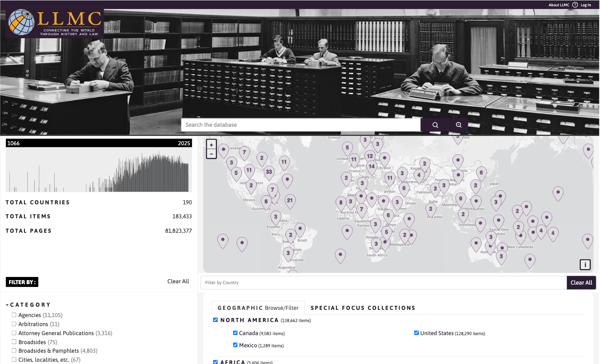
For example, LLMC provides open access to approximately 4.5 million pages, while subscribers can access a further 80 million pages within the same platform. This type of model enables institutions to balance public access with rights management, sustainability, and long-term stewardship.
Scenario 3: Extending access beyond physical reading rooms
Some materials are traditionally only accessible within supervised reading rooms due to a range of considerations, including:
Privacy: Some materials may contain personal information about identifiable individuals — such as letters, case records, or community archives — where open online access could expose people or their families in ways that were never intended.
Sensitivity: Materials may relate to topics such as health, discrimination, or activism, or lived experience. While historically important, they may require careful framing and intentional engagement rather than casual browsing.
Donor agreements: Some collections are donated with specific conditions attached — for example, that materials are only accessible in controlled environments, only to researchers, or only after a certain period of time.
The need for contextual support: In physical reading rooms, archivists often provide guidance to help researchers interpret materials appropriately. This is particularly important for culturally sensitive material, incomplete records, or items that could be misunderstood without background context.
While digitisation can make archives more accessible, it can also remove the intentional, supervised environment that comes with physical access.Thoughtfully structured online access controls can help bridge this gap
For example:
-
Login-based access can support intentional engagement.
-
Institutional authentication can limit access to recognised researchers.
-
Tiered permissions can be used to reflect donor conditions.
-
Hybrid models can allow remote access while preserving oversight.
In this context, access controls extend — rather than restrict — the reach of collections. They allow institutions to balance accessibility with care, context, and responsibility.
They also have the added benefit of supporting long-term preservation, by reducing the physical handling of original materials.
Scenario 4: Supporting advanced research environments
In some cases, the content itself remains publicly accessible, while access controls are used to enable advanced research tools such as large-scale analysis environments, bulk downloads, APIs, and structured datasets.
This approach is particularly relevant for collections supporting intensive research activity, where access controls help organizations:
-
Manage system load and infrastructure demands.
-
Ensure licensed or sensitive content is used appropriately.
-
Provide researchers with accurate, well-governed datasets.
-
Sustain and maintain specialised research services.
In this scenario, collections remain open for general use, while enhanced tools and data access are structured to support serious research use in a controlled environment.
How do you choose the right access model?
The right access model depends on the collection’s content, users, rights, sensitivities and long-term goals. Organisations should identify which material can be openly available, what requires additional controls and whether different rules should apply to content, tools or user groups.
Access controls should be proportionate to the risk or responsibility involved. They should enable appropriate use without creating unnecessary barriers for legitimate users.
We work with institutions including LLMC, Cambridge Public Library, Vassar College, Kathimerini, the Star Observer, Publishers Weekly, and Irish Newspaper Archives to create bespoke approaches that reflect these priorities, ensuring access models are fit for purpose.
Veridian Software is designed to support this level of flexibility, allowing access controls to be applied across a single collection in different ways and enabling institutions to tailor access to the unique needs of their collections, communities, and responsibilities.
Ready to rethink how access could support
your collection strategy?